… and not to yield

We are not now that strength which in old day

Moved earth and heaven, that which we are, we are, —

One equal temper of heroic hearts,

Made weak by time and fate, but strong in will

To strive, to seek, to find, and not to yield.

— from Ulysses, by Alfred Lord Tennyson

Isn’t it funny how quickly we lose heart? We start with passion and zeal! The smallest idea, with all its novelty and all the little unknowns, seems like it could change the whole world. It isn’t a small idea at all! It’s a seed that will sprout and grow and tear through the earth, whose roots will tumble the existing structures of hate or inequality or mediocrity or (insert worthwhile cause here), crumbling their foundations just by the nature of what it is.

But we don’t realize that for a root to tear through the earth, it first has to come into opposition with the earth. For the seed to sprout, the seed first has to die. It has to break open. The hard shell cracks and gives way to the vulnerable insides.

It is the cracks that kill us. Our tiny idea turns into a grand dream, and then slowly turns back into a tiny idea again. As time goes on we experience failures, and we sober up to the fact that we aren’t perfect, and we experience that sometimes our close friends aren’t so close, and maybe they aren’t so friendly. Our families misinterpret our intentions. Our safe places turn into burnt bridges. The passion we once had turns into a memory at best, but more likely a scar. A painful reminder that things don’t always work out. For some of us, a reminder that things quite rarely work at all.

But what I love about this poem excerpt is how it ends. “…but strong in will / To strive, to seek, to find, and not to yield.”

The truth is that things have a tendency to get worse before they get better. But there is something to be said for not giving up.

My failures and shortcomings and memories of the things I’ve said, the lives I’ve effected in terrible ways, the people who may never have faith because of the actions they witnessed me take, those things may haunt me. But I can still be strong in will.

The opposition may grow, my help may fade, and the odds may seem completely against me. But I can still strive.

The haze of self-doubt, or the blindness of self-assurance, may make it hard to see the right road, the one that leads to life and community and love. But I can still seek.

And despite everything, all the hurts of the past and all the insecurity about the future, I know the journey is worth it. I know there’s a reason I’m here. I know the people around me are meant for more than working and paying taxes and accumulating junk and dying. I know that God is there. And as long as I know all that, I can not yield.

And so I embrace my little ideas. And though time and fate take their toll, I won’t give up. And words more powerful than any poem have assured me that, even when seems contrary, I will never be alone.
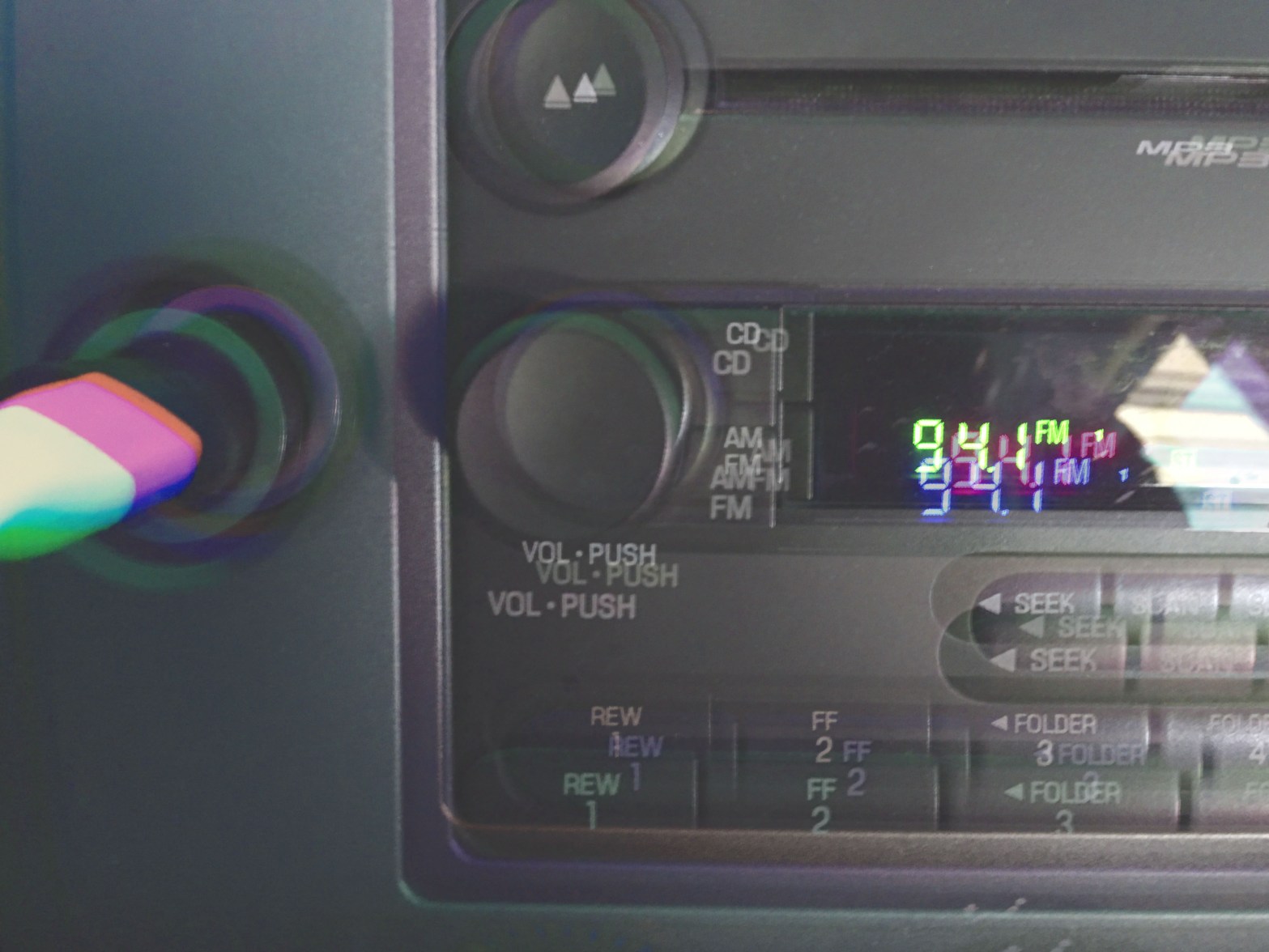
The Radio

Today I drove something like 30 miles throughout the day. In that time, what did I see? Pavement. Traffic lights. The other mechanical beasts barreling down the black headstone to our dead and buried earth. Towering steel beams, pouring out their artificial light. Cold, colorless structures where men kill their dreams and sell the pelts so they can feed their families (or their flesh.) I saw the creations of men, wonderful and terrible, who are running from their soul.

When I take a rare moment to actually take in what’s around me, I begin to notice things. I notice the amazing contour of the clouds. I notice the beauty, and sometimes terror, of the sky. Sometimes it is a penetrating blue, sometimes it is a vast gray, but it is always a sight to behold. I notice the many nuances of the different trees and shrubs and grass and flowers. What seems just a sea of monotonous green at a quick glance, if studied just a moment longer, reveals such vibrant variety. No wonder artists spend their lives trying to reproduce landscapes.

There is something beautiful and refreshing about the world around us. We know that taking time away in a natural setting can work wonders to reduce stress in our lives. But what have we done? We have given ourselves over to a life where nature is unnecessary. We know that there is something refreshing in nature, but nature doesn’t pay the bills. So we have paved over the earth to commute faster to work. We have replaced the wonder of the oak tree with the efficiency of the sky scraper. We have traded the majesty of a starry night with the dull hum of street lamps. “Stop and smell the flowers?” We don’t even look at flowers! Practicality trumps prudence.

When we allow ourselves to become still, we know something is missing. We know there’s more to life than what we’re experiencing. But instead of acknowledging it, we develop an allergy to stillness. Better to be productive than to deal with the aching in my soul.

It seems that humanity will never graduate from her insistence on avoiding the divine. When we ate the fruit, we began hiding. We have never stopped. At first we sullied the beauty of our naked bodies with stitched leaves and fur. Now we sully the earth with our concoctions of mortar and lumber and concrete. If we can’t avoid the divine altogether, at the very least we can save ourselves from the divinity the earth reflects.

God has revealed so much to us through nature, not just about Him, but also about us. We see His amazing attention to detail and order reflected in the feather of a pigeon. We are stunned by our own fragility when we are faced with a dark, starless night. As winter passes to spring we see the illustration of the seasons of life. And just as the sun is present through those seasons, we see that God is always present in our seasons, whether seasons of death and decay or seasons of new, resounding life.

But what have we done? We have created a world devoid of pigeon feathers. We have created a world unaffected by starless nights. We have manipulated our surroundings so that the seasons don’t touch us and the sun is a menace for all its troubling heat! Give me my office or my bedroom! Give me my lamp and my air conditioning! To hell with nature! Who has time for that?

To hell indeed.

Modernity isn’t bad. Technology is wondrous. Medicine is a short step from miraculous! But why are we so subconsciously drawn to the beauty and majesty of the world around us, but simultaneously content with observing it from afar, or better yet, not being bothered with it at all?

I believe we sense the divine. When we look at a mountain range or the starlit night sky or a beehive or an autumn leaf, we recognize the divine. We know the divine is present, and our souls cry out! But if the divine is there, what does that mean? What about the rest of this? What about the life I’ve been building for myself? And even if I could somehow figure all that out, look at the beauty of the world before me! How could I ever measure up? Me?!

So, as we’ve always done, we hide. My soul cries out, so I turn up the radio.