The Chasm

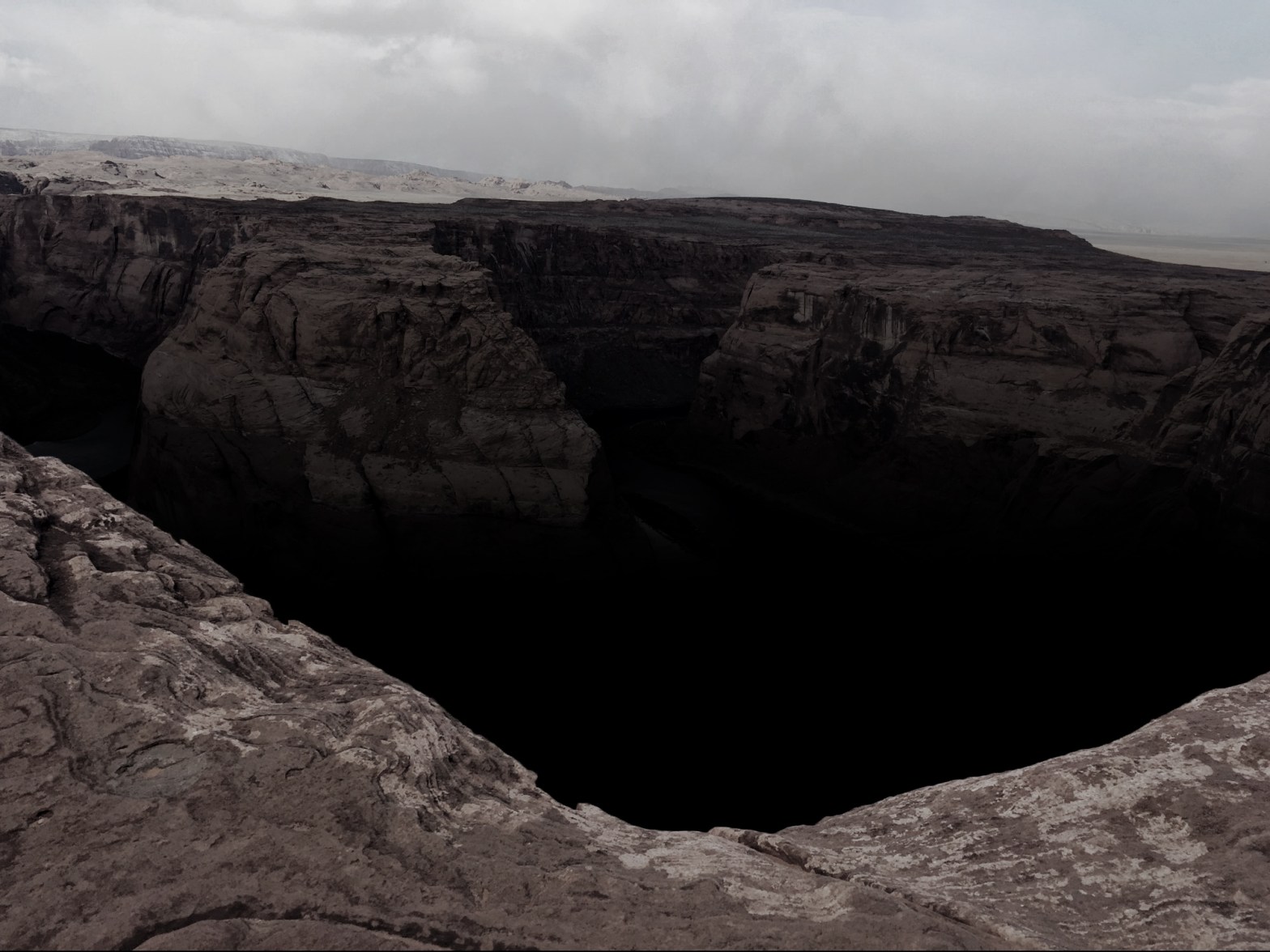
I’m sure most of us are well acquainted with the gap between the ideal and the real, the potential and the actual. “Gap” may not be the right word. I have a “gap” between my central incisor and canine tooth. Gaps are small. Most of us are standing on a precipice looking over a hopeless chasm and seeing all that we wish our lives were, all that we would love to become, and it is well out of reach on the other side.

We stand looking down into a deep, dark canyon, and the darkness staring back at us is our reality. We first glance down at our shortcomings, then up at our goals; down at our failures, then up at our dreams; down again into our unmet expectations, up again into the potential we know exists. All the while, our feet never move.  What is it about humanity that leaves us in this place of knowing what we should be doing but stopping short?

I don’t really have an answer aside from this: I believe it speaks to our need for something outside of ourselves. There is a desire in me to experience a life that I’m not experiencing, to experience a world in which none of us live. I believe that desire is in all of us. Even those of us who have grown cold to that desire didn’t start off cold. That desire was slowly killed by the world we do know, by the realities we’ve met, and by the expectations that let us down. But every one of us looks at our life and knows there’s more, we look at the pain in our world and know it isn’t right, and we crave something better.

C.S. Lewis speaks to this in Mere Christianity.

The Christian says, “Creatures are not born with desires unless satisfaction for those desires exist. A baby feels hunger: well, there is such a thing as food. A duckling wants to swim: well, there is such a thing as water. Men feel sexual desire: well, there is such a thing as sex. If I find in myself a desire which no experience in this world can satisfy, the most probable explanation is that I was made for another world.

I find myself in this place, staring at the chasm, more often than I’d like to admit. I have a lot of lofty ideas and a lot of big dreams, and I am all too sober of where I stand in relation to those ideas and dreams. But when I feel small, I trust that God is big, and that the desires that are in me are there on purpose. That doesn’t necessarily help the pain of the chasm go away, but it helps me press through the pain and reach for the goal. At the end of the day, I don’t know if I can close the gap between the ideal and the real. I definitely don’t think I can do it on my own. But I refuse to stand with my feet fixed in position and watch the world pass me by because I’m too afraid or confused or broken to reach out and take hold of the dreams God has put in me.

I won’t become a better father by thinking about becoming a better father. I’ll become a better father by getting on the floor and playing with my kids, by reading to them at night, by praying with them and asking them to help me while I pray for broken and hurting friends.

I won’t become a better husband by dreaming about a good marriage. I’ll become a better husband by wooing my wife, by taking her on dates, by staying home from guys night to help her get kids ready for bed and walk the dog, by showing her my love and appreciating hers.

I won’t get closer to any goal by staring at my shortcomings. My life won’t change by wallowing in the chasm. The chasm is real. I really don’t measure up. But my feet can still press forward, and I can close the gap little by little. God put the dream there, who am I to kill it?

Make A Choice

In the book Room for Doubt, the author Ben Young says the following:

Existentialism looks at our humanity straight in the eye and says, “One day you are going to die, and in light of your impending death, how will you choose to authenticate yourself in this one and only life you will live? Make a choice.”

I thought a lot about this. I wrote a lot of rough drafts of this blog post. What I’ve decided to do is step back from my general mode of operation and not explain, not dive in, not paint a picture of what’s going on in my mind with this probing question laid out before us. But I wanted to bring it forward, lay it out, and encourage you – Make a choice.

Psalm 39:4-5 says:

Lord, remind me how brief my time on earth will be.
    Remind me that my days are numbered—
    how fleeting my life is.
 You have made my life no longer than the width of my hand.
    My entire lifetime is just a moment to you;
    at best, each of us is but a breath.”

We don’t live forever. Our time comes to an end. Everything that we do has an impact. Unless it doesn’t…

Make a choice.

Into The Mountain


    Imagine looking around and all you see is a darkness. This isn’t an empty darkness. This isn’t the black of a void. This is an earthy black, like looking at the bottom of a cavern. You know color exists there, but the fullness of the darkness dampens any nuance of color.
    So here you are, in darkness, but not emptiness, surrounded by color, but unable to see it, when suddenly a stream of white swirls its way through the darkness. I say stream almost literally. This white is fluid, dancing as it breaks apart and wisps its way through the once colorless expanse. The brightness of this white doesn’t overpower the dark, but it illuminates the once hidden tones of hickory and sienna. The white is no longer white. The dark is no longer dark. But now you are surrounded by a dynamic and whimsical ballet. It’s as if you’re standing in the center of the Northern Lights looking through brown-tinted lenses.
    This is beautiful.
    This is novel.
    This is a fairy tale.
    This is a cup of coffee…
    No, really. This morning as I poured my International Delight Caramel Macchiato creamer (yes, I use sugary creamer, want to fight about it?) into my coffee, I watched the creamer swirl through the coffee and thought it was beautiful. Then I began to think about how many times I’ve done the same thing — pour creamer into coffee, without seeing what was actually happening. There’s actually something visually stunning taking place, but I’m so used to it, and so caught up in the practicality of coffee, that I ignore the beautiful alchemy happening underneath my nose. I rush past the spectacular to dwell in the pragmatic.
    Isn’t this how life is sometimes? Most times? We get so caught up in the hustle that we rush past the truly beautiful moments that are available to us. We’re so concerned with finishing the work on our computer that we hush the songs of our children instead of singing at the top of our lungs along with them. We’re so concerned with getting to dinner on time that we ignore the sunset in the background so we can curse the driver who shouldn’t be in the passing lane. We get so caught up in all the wrong details.
    This reminds me of the moment in the Bible where God tells Moses, “Come up into the mountain, and be there…” (Exodus 24:12 KJV). I don’t remember where, but I’ve heard somebody speak to the redundancy of this statement. “Go there, and be there.” Why would God need to add the second part of that statement? If Moses went up on the mountain, how could he not “be there”?
    God knows us. He knows our tendency to be there but not really be there. He knows our tendency to be at the dinner table but to really be at work. He knows our tendency to be at the park with our kids but really be planning the chores that need done when we get home. “Go there, and be there,” because we have to learn to be present in the moment instead of bodily there and mentally somewhere else.
    I know that we can’t live in the clouds. I know that things actually need done. Laundry needs washed. Dinner needs cooked. Work requires 40 hours a week (if you’re lucky). But there’s more to life than that. Kids don’t stay young forever. Love grows cold if you don’t stoke the fire. Books don’t read themselves. Life goes on even if you don’t find yourself engaging in it.
    This is my reminder to myself and my encouragement to you: Engage in life. Be present. Enjoy the little moments. Go on the mountain, and be there. God made us for more than the hustle. Toil didn’t happen until after the fall. By all means, have the coffee. But for goodness’ sake (really, for your own sake), enjoy the creamer too.

Harmony & Dissonance

    The earth as we know it was not God’s intended purpose. The story of the garden teaches us that God intended us to have a life spent hand-in-hand with Him and with creation. Life was intended to be a synchronized harmony. We see hints of this in the interconnectedness of the various lifeforms that make up complex ecosystems, and how easily those ecosystems are thrown off by just a small few of these symbiotic relationships being disrupted. We can see this at work in the constants that make our planet inhabitable, and we can see it in the order and consistency of creation as time goes on. Life exists through harmony.
    But a lot of what we experience is not this harmony. Much of our experience is discord. Health is harmony; cancer is discord. Love is harmony; murder is discord. Altruism is harmony; greed is discord. To walk with God is harmony; to walk alone is discord.
    The world we see is a chord struck in harmony and suddenly interrupted by the broken note of selfish man. The sweet melody is lost to our present reality, but its memory echoes in our souls. We long for love and wholeness and healing because we know in the depths of our being that these are the things we were created for. Death and brokenness and malice are so abhorring to us because they are foreign notes interjected into our favorite song. They don’t belong, and our souls know it.
    This is the beauty of the healing of God. When we see Jesus and the apostles heal, what we are seeing is the restoration of creation to God’s original design. People line the streets, embodied dissonance, notes devoid of a melody. Then the master composer rearranges them, puts them in order, and a song emerges from the chaotic clangs of broken refrain. And this is just a picture, a foretaste of what’s ahead: a new heaven and a new earth. Restored harmony.
    Heaven isn’t God’s escape plan, it is God’s reconstruction plan. He isn’t trying to get people out of the earth and into heaven, He is trying to heal the broken and turn earth into the new heaven. God isn’t trying to make an evacuation plan. He has made an invasion plan. He invaded our dissonance in Christ and has been at work ever since.


This thought came from a meditation first on Acts 5:14-16, then more broadly thinking about healing in the Bible. If Jesus healed, and empowered his disciples (and us) to heal, that must mean there’s something in the world we see that doesn’t line up with the world God intends. And because we were created by God, and something in us wants to live the way we were created to live, there is pain when there’s a disconnect between that innate desire for harmony and the reality of the broken world we live in.

I think it’s important to recognize the brokenness we live in. I also think it’s important to recognize that God designed us for more, has destined us for more, and sent Jesus so that we could experience more. Maybe you find yourself in a moment of harmony. Enjoy it. Recognize that others aren’t experiencing it. Help them. Maybe you find yourself in a moment of dissonance. Find hope in the fact that God’s plan is to restore you to the harmony he intended for you from the beginning of time, and no matter how long the sustain of dissonance, God will bring a resolve.

Acts 5:14-16

    Believers were added to the Lord in increasing numbers — crowds of both men and women. As a result, they would carry the sick out into the streets and lay them on cots and mats so that when Peter came by, at least his shadow might fall on some of them. In addition, a large group came together from the towns surrounding Jerusalem, bringing sick people and those who were tormented by unclean spirits, and they were all healed.

Broken People & Chicken Sandwiches

    I apologize to those of you who may have seen my “sneak peek” at today’s blog post. I had intended to post something else without realizing the date today’s post would fall on. In light of today and the significance it holds, I decided to go a different direction. The aforementioned post should be up next week. I hope you’ll let this speak to you until then.
    Like most people, I remember where I was when the towers fell. I was at lunch in Souers Middle School when a teacher came up to me and told me my older sister was there to pick me up. I was annoyed because it was chicken sandwich day, and I loved chicken sandwich day. I didn’t get a chance to eat my sandwich.
    I didn’t know why I was being picked up from school. And when I got to my sister’s house, I still didn’t really understand. The news was on and they were replaying videos of planes hitting the towers and were continuously giving live updates. But we were nowhere near the action, so it didn’t make much sense to me. Why was this affecting my life right now? Why was I not with my friends at school enjoying my chicken sandwich just because something was happening hundreds of miles away?
    I’m a little older now, and while I still can’t say I fully understand what it was like that day for somebody a little older and a little more mature than I was, who really understood what was happening, I can reflect back and share some significance this has for me now. There are probably several things I could talk about, numerous facets of the events that unfolded could speak to different areas of life, but there’s one part I want to focus on: compassion.
    Most people who understood what happened that day did not share my chicken sandwich mentality. They were not irritated to have their life interrupted by something so far away and so meaningless to them. People weren’t worried about their day, they were worried about their fellow countrymen. They were worried about the people trapped, the people killed, the broken and hurting families, the sacrificial and heroic rescue workers. People let their life take a back seat to care for others who weren’t in the same life situation they were in.
    There’s more that could be said. There are individual stories that would drive people to tears. There are stories of sacrifice and resiliency. There are stories of incredible love through an incredibly dark situation. But what stands out to me the most today, as I look back, is that people cared. They genuinely cared.
    The world today is divisive. It’s “us versus them.” Everybody has an agenda. Everybody has an opinion. Everybody has a complaint. And, at the end of the day, many of us are only concerned as far as we are involved. I’m as guilty as the next guy. Why should I care about the Black Lives Matter movement? Why should I care about the LGBT+ movement? Why should I care about the Women’s Liberation movement? Why should I care about immigration reform? Why should I care about any of the hot-button social/political movements currently happening in our country or our world? They’re so far away! They don’t affect me! I just want to enjoy my chicken sandwich!
    But that’s not true. These issues aren’t far away. They’re not happening somewhere out there. They’re issues that affect my neighbors and my loved ones. They’re happening next door.
    When the towers fell, people gave of themselves to help rebuild. They understood the radical implications that the event had in the lives of the people involved, and they wanted to help. People could have stayed safe in their homes with their families beside them, turned off the TV, and not been bothered with it. But they understood something. They understood that there were others who were affected. They understood that there were others who could no longer sit beside their families, safe and unbothered. They understood that where one person is hurting, we’re all hurting. And they knew that if they were in a position to help the hurting, it would be wrong to sit idly by and do nothing.
    It may not have affected them personally. The issue may have stayed far away. But if they could help broken people, they needed to help.
    That’s my take away. As I look around at the world today, I can respond in one of two ways: I can see the broken and the hurting, and I can see how they don’t look like me or how I don’t agree with their point of view, and I can be happy and content with the hand I’ve been dealt and eat my chicken sandwich. Or, I can see the broken and the hurting, and I can see how they don’t look like me or how I don’t agree with their point of view, and I can recognize that we’re all dealt different hands, but we’re all human and God loves each one of us, and I can get off my high horse and love people and be compelled to stand in the corner of the people that need it most.
    I pray that I can always take a stand for compassion. Life is short. People are precious. I hope I can learn to choose people over my preferences.


Specks and Logs

    An unfortunate side effect of the familiarity of certain scriptures, even in secular culture, is that potentially life-changing proverbs and lessons get breezed by because of their commonality. There are certain little maxims we’ve heard so many times that we relegate them to cute little cliches instead of what they really are: words to live by. Even if we don’t completely cast them aside, we at least compartmentalize them. There may be a broader application, but we’re so used to hearing the words in relation to specific actions or ideas that we have a hard time connecting the dots to other areas of our lives.
    This week, two such scriptural maxims came to my mind: don’t judge (James 5:9), and don’t point out the speck in your brother’s eye when you have a log in your own (Matthew 7:3). Maybe a more common version of the second is “the pot calling the kettle black.”
    This past week, a very prominent and well known pastor in Houston went under an incredible amount of scrutiny for a decision he made. I’m not going to talk about the decision he made, whether it was right or wrong, or what I think about it. What I do want to talk about, however, is how the scrutiny quickly degenerated from an issue related to a specific action or decision to a broad attack on the man’s character and life based on something pretty unrelated to the issue at hand. It turned from a conversation (or, more accurately, an onslaught of half-informed critics) about the right course of action with Houston residents and the current flooding to a conversation about money, and why this man is terrible for having it.
    Here’s what’s incredible to me: if you live in America, you are among the wealthiest people in the world. Even the poor in America are, by global standards, middle class. Most people in America would be considered high income on the global scale. So, when we all take to the streets (or more accurately, the internet) to crucify somebody for what we consider a heinous crime against humanity because of their wealth, maybe we should take a step back and look at our relative wealth.
    The truth is, I spend a lot of money on things that don’t matter. Do I give to non-profit organizations? Yes. Do I financially support organizations that are impacting the impoverished of the world? Yes. But do I spend even a relatively close amount of my income on that when compared to what I spend on my own comfort – house, vehicles, video games, fast food? Not even close.
    Do you?
    So the question is: why, then, is it okay to jump on the bandwagon against somebody else (who is doing the same thing as we are) just because they may be doing it to a larger scale? (Side note: we don’t know that the man is doing the same thing. For all I know, he gives a larger percentage of his income than I do to better causes than I do. But, that’s part of the problem — we don’t know, and we don’t care.)
    His house seems excessive to some. I have a room in my house dedicated solely to the toys of my children. I bet that seems pretty excessive to people living on skid row. His clothes seem excessive to some. My wife has been asking me for three months to get rid of some of my shirts because I don’t wear them at all, and they’re just taking up space in my dresser and closet. His income is too high for some. Compared to other authors (which is where his income comes from — his books), he isn’t even close. Why don’t we care what those people are making? Or sports figures? Or movie celebrities? But, let’s point it back to me. There are people in the world who live off less than $2 a day. The empty Starbucks cup sitting next to me as I write this cost more than that. Then add in the gas to drive here, the laptop in front of me, the books beside the laptop, the earbuds in my ears… Are we getting the point yet?
    I understand that we should be concerned with the wellbeing of humanity. I understand that, as Christians, we should be concerned with how our brothers and sisters of faith are living up to the standard God has given us in the Bible. I understand that we can speak our grievances and try to hold our fellow man accountable for his actions. This is not a broad justification of inordinate wealth.
    What I am doing is trying to make us refocus. Instead of spending my time wondering or complaining about what another man does with his resources, why don’t I reevaluate what I’m doing with my own? Instead of playing a guessing game about somebody else when I don’t even have the facts and figures, why don’t I make a game plan for how to be faithful with my own personal assets? Instead of pointing out specks in other people’s eyes, why don’t I try tossing some of my own logs in to the wood chipper? God knows there are plenty of logs in my own life.
    Let me be very clear as I end this thought out. This isn’t about people’s reaction to one man. This isn’t about justifying or defending that man. This is about evaluating my own heart and challenging you to evaluate yours as well. If I care about what others are doing with their finances, resources, time, energy, whatever, then I better be taking careful inventory of what I’m doing with mine. When I judge others, I’m inviting judgment back on myself. I don’t know about you, but I would rather try to focus on leveling the forest growing out of my own eye so that I can stand faithful before God. I would rather put my time and energy into something I can actually change. And I hope I can treat others who are in a position that I know nothing about with the same love and grace that I want people to treat me with.

… and not to yield

We are not now that strength which in old day

Moved earth and heaven, that which we are, we are, —

One equal temper of heroic hearts,

Made weak by time and fate, but strong in will

To strive, to seek, to find, and not to yield.

— from Ulysses, by Alfred Lord Tennyson

Isn’t it funny how quickly we lose heart? We start with passion and zeal! The smallest idea, with all its novelty and all the little unknowns, seems like it could change the whole world. It isn’t a small idea at all! It’s a seed that will sprout and grow and tear through the earth, whose roots will tumble the existing structures of hate or inequality or mediocrity or (insert worthwhile cause here), crumbling their foundations just by the nature of what it is.

But we don’t realize that for a root to tear through the earth, it first has to come into opposition with the earth. For the seed to sprout, the seed first has to die. It has to break open. The hard shell cracks and gives way to the vulnerable insides.

It is the cracks that kill us. Our tiny idea turns into a grand dream, and then slowly turns back into a tiny idea again. As time goes on we experience failures, and we sober up to the fact that we aren’t perfect, and we experience that sometimes our close friends aren’t so close, and maybe they aren’t so friendly. Our families misinterpret our intentions. Our safe places turn into burnt bridges. The passion we once had turns into a memory at best, but more likely a scar. A painful reminder that things don’t always work out. For some of us, a reminder that things quite rarely work at all.

But what I love about this poem excerpt is how it ends. “…but strong in will / To strive, to seek, to find, and not to yield.”

The truth is that things have a tendency to get worse before they get better. But there is something to be said for not giving up.

My failures and shortcomings and memories of the things I’ve said, the lives I’ve effected in terrible ways, the people who may never have faith because of the actions they witnessed me take, those things may haunt me. But I can still be strong in will.

The opposition may grow, my help may fade, and the odds may seem completely against me. But I can still strive.

The haze of self-doubt, or the blindness of self-assurance, may make it hard to see the right road, the one that leads to life and community and love. But I can still seek.

And despite everything, all the hurts of the past and all the insecurity about the future, I know the journey is worth it. I know there’s a reason I’m here. I know the people around me are meant for more than working and paying taxes and accumulating junk and dying. I know that God is there. And as long as I know all that, I can not yield.

And so I embrace my little ideas. And though time and fate take their toll, I won’t give up. And words more powerful than any poem have assured me that, even when seems contrary, I will never be alone.

The Radio

Today I drove something like 30 miles throughout the day. In that time, what did I see? Pavement. Traffic lights. The other mechanical beasts barreling down the black headstone to our dead and buried earth. Towering steel beams, pouring out their artificial light. Cold, colorless structures where men kill their dreams and sell the pelts so they can feed their families (or their flesh.) I saw the creations of men, wonderful and terrible, who are running from their soul.

When I take a rare moment to actually take in what’s around me, I begin to notice things. I notice the amazing contour of the clouds. I notice the beauty, and sometimes terror, of the sky. Sometimes it is a penetrating blue, sometimes it is a vast gray, but it is always a sight to behold. I notice the many nuances of the different trees and shrubs and grass and flowers. What seems just a sea of monotonous green at a quick glance, if studied just a moment longer, reveals such vibrant variety. No wonder artists spend their lives trying to reproduce landscapes.

There is something beautiful and refreshing about the world around us. We know that taking time away in a natural setting can work wonders to reduce stress in our lives. But what have we done? We have given ourselves over to a life where nature is unnecessary. We know that there is something refreshing in nature, but nature doesn’t pay the bills. So we have paved over the earth to commute faster to work. We have replaced the wonder of the oak tree with the efficiency of the sky scraper. We have traded the majesty of a starry night with the dull hum of street lamps. “Stop and smell the flowers?” We don’t even look at flowers! Practicality trumps prudence.

When we allow ourselves to become still, we know something is missing. We know there’s more to life than what we’re experiencing. But instead of acknowledging it, we develop an allergy to stillness. Better to be productive than to deal with the aching in my soul.

It seems that humanity will never graduate from her insistence on avoiding the divine. When we ate the fruit, we began hiding. We have never stopped. At first we sullied the beauty of our naked bodies with stitched leaves and fur. Now we sully the earth with our concoctions of mortar and lumber and concrete. If we can’t avoid the divine altogether, at the very least we can save ourselves from the divinity the earth reflects.

God has revealed so much to us through nature, not just about Him, but also about us. We see His amazing attention to detail and order reflected in the feather of a pigeon. We are stunned by our own fragility when we are faced with a dark, starless night. As winter passes to spring we see the illustration of the seasons of life. And just as the sun is present through those seasons, we see that God is always present in our seasons, whether seasons of death and decay or seasons of new, resounding life.

But what have we done? We have created a world devoid of pigeon feathers. We have created a world unaffected by starless nights. We have manipulated our surroundings so that the seasons don’t touch us and the sun is a menace for all its troubling heat! Give me my office or my bedroom! Give me my lamp and my air conditioning! To hell with nature! Who has time for that?

To hell indeed.

Modernity isn’t bad. Technology is wondrous. Medicine is a short step from miraculous! But why are we so subconsciously drawn to the beauty and majesty of the world around us, but simultaneously content with observing it from afar, or better yet, not being bothered with it at all?

I believe we sense the divine. When we look at a mountain range or the starlit night sky or a beehive or an autumn leaf, we recognize the divine. We know the divine is present, and our souls cry out! But if the divine is there, what does that mean? What about the rest of this? What about the life I’ve been building for myself? And even if I could somehow figure all that out, look at the beauty of the world before me! How could I ever measure up? Me?!

So, as we’ve always done, we hide. My soul cries out, so I turn up the radio.