Finding My Purpose

Last week I got the opportunity to speak at our college ministry at my church. What I talked about there ties in a lot to my passion for this blog – the fact that we’re here to impact the people around us, and despite often feeling ill-equipped or unqualified to make that impact, we still can with some perspective change and some intentional action.

I don’t usually post twice so closely together, but I wanted to make this available asap for people to enjoy! It is definitely geared toward the college student, but I think you’ll be able to find applicable information no matter what age or season of life you’re in!

See the video here.

Breaking Barriers

Over the last several years, reading has become a staple in my life. Specifically, I’ve made it a point to read things that challenge me to grow or change or expand my knowledge or outlook in some way. I do read some things just for fun as well, so I’m not saying fiction is a no-no, but my focus is on things that will grow me. The reason I started The Endeavor was because I believe we all have some person in mind that we want to become, and I also believe that there are steps we can take to become that person. We aren’t stuck where we are. For me, reading has been one of those steps.

I wanted to share a few reasons why I value reading, then challenge you to pick up some books if you aren’t already an avid reader. Here’s the deal – I know that we don’t all learn the same way. For some, reading is really not the best way their brains retain information. I get it! But I still stand by the fact that there are some things you’ll get from reading that you just can’t get elsewhere. Even if you’re not a “book person,” I think there’s a lot to gain be stretching yourself and reading anyway!

One of my favorite things to do is to sit and hear people’s stories. You can learn from anybody if you have an open mind. Even a fool can teach you what not to do. However, there are some people we are completely removed from, either by time or space. Speaking specifically from the point of view of a Christian, there are so many great men and women of God who have lived in the distant past, and there are so many contemporary men and women of God who, chances are, we will never get the opportunity to see.

Books break the barrier of time and space. They bridge the gap between people us and the people we will never otherwise see. Think about historical figures you’d love to just sit and interview, to have coffee with and ask them questions like you would a good friend. Books are the closest thing we have to that connection! I will never be able to talk to Eugene Peterson or R.C. Sproul or C.S. Lewis or G.K. Chesterton or Dietrich Bonhoeffer or Augustin. It isn’t likely I’ll ever get a face to face meeting with Timothy Keller or Judah Smith or Steven Furtick or John Eldredge or Mark Batterson. Even if I did get that opportunity, who knows if I would even know what to ask! However, I do have their books. I do have collections of their thoughts and stories, the things they’ve seen worthwhile enough to take the time and effort to write down and pass on. Reading books is like having access to a huge number of spiritual mentors you would otherwise have no access to. I think that’s amazing!

Books also break the barriers of our own experiences and prejudices. Part of what makes us all unique is that we all see every event through a different lens. I have a twin sister. We both grew up in the same house, with the same parents and siblings, and experienced the same life events. However, we’ve both done all of those things from our own unique perspectives, which has given rise to different outlooks and different responses. That’s not a bad thing! God made us unique! However, due to that fact, it can be pretty easy to favor our own outlooks and to be confused (or offended, or downright unaccepting) at somebody else’s.

Reading something somebody else has written on a subject you’re already pretty certain of can give you different lines of thought, different angles, a different understanding of the subject matter. Your opinion may not change, but you will at least have a fuller, and often more human, view of the other side of the matter. When you see somebody articulate their thoughts with reason and life experience, it’s a lot harder to just write them off as a whack-job their differences from you. While you may never have agreement, you can at least have understanding, and that is very valuable!

Finally, books challenge us to change our perception of what’s possible. When we see what others have done, when we hear their thoughts and get to witness through their stories where they’ve come from and what they’ve done, it awakens something in us that says maybe it really is possible to become more, to be better, to achieve something that everybody else says we could never do. It’s been done before, so why not again, and why not with me?

Reading the words of some of the people you look up to and put on a pedestal helps to bring them down into the realm of reality, into the same world you live in. You get to hear about some of the things they’ve struggled with, the things they’ve had to overcome, and how they did it. When that person becomes, in your eyes, a person just like you, it helps you realize the implications that you could also become a “great,” just like them. It will take some work, it will take some growth, it will take some change, but it can be done.

So, that’s why I read. There’s a person I want to become, and there are a lot of other people who have some of the characters I hope to embody some day, so why not learn from them on the journey and let them speak into my life rather than trying to figure it out all on my own?

I’ve kept lists of the books I’ve read over the last few years, so I put amazon links to some of my favorites on this page. Take a look! Put some of these on your Christmas list! Here is a picture of my finished books lists from the last three years (2018 isn’t finished yet). There’s a lot of fiction on these too, and that’s okay! We’re supposed to enjoy life too, so I’m all about fun reading as well! If you have any questions about any of these books, let me know! I’d love to chat about them!

books read

I’d love to hear your feedback. What have been some of your favorite books? Why? Leave a comment below and let me know!

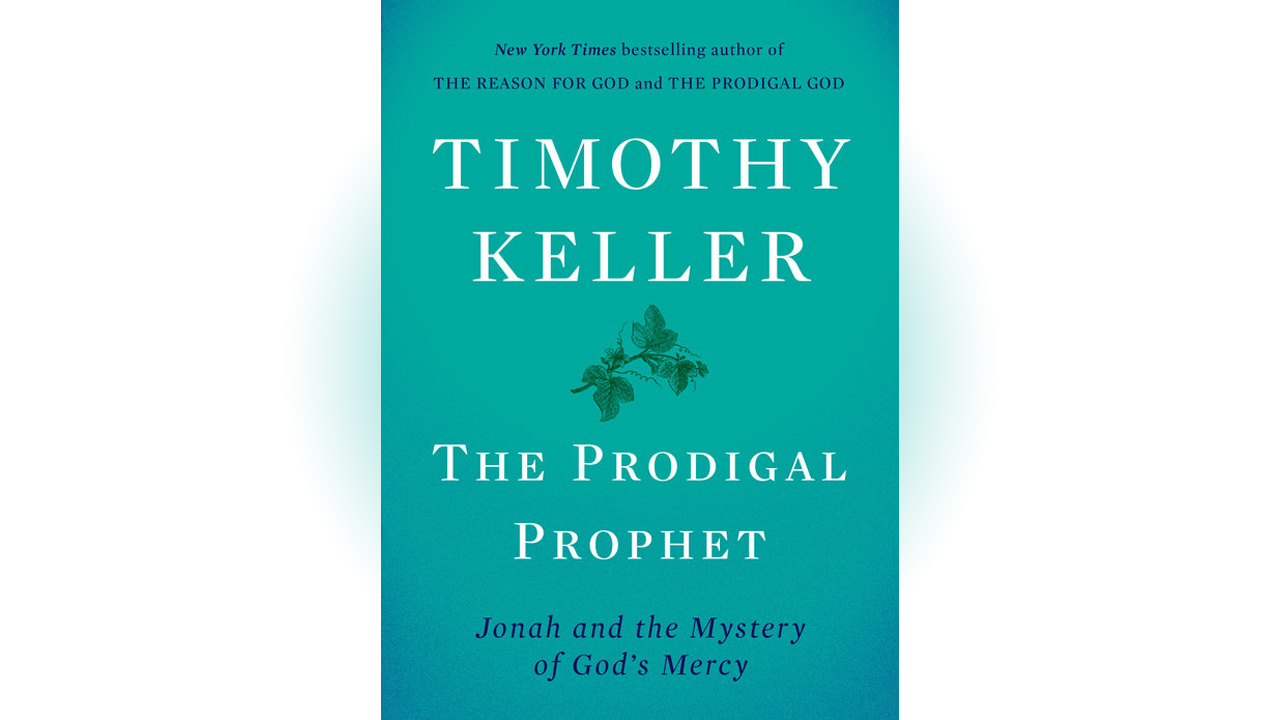
Book Review – The Prodigal Prophet

In The Prodigal Prophet, Timothy Keller brings the story of Jonah forward and points out a number of insights that really are remarkable. The breakdown of the book of Jonah given in the introduction, alongside a concise parallel of the book of Jonah with the story of the prodigal son, left me wondering how in the world I could already have so much information (dare I say revelation?) without even breaking into chapter one yet. To say the book is rich is an understatement.

In his acknowledgements, Keller mentions “… the numerous and varied lines of application to contemporary issues and problems…” present in the book of Jonah. I believe he does such a good job of presenting multiple lines of thought that depending on your season of life, you could walk away from the book with a different take-away every time you read it. However, I do believe there was an overarching theme.

In a culture dominated by polarization and an us-versus-them mentality, The Prodigal Prophet has above all been a challenging but needed reminder that Christ’s love is not predicated on sameness. A person’s likeness to myself does not qualify them for the love of God. Their unlikeness to myself does not disqualify them.

God sent a prophet of His chosen people, Israel, to the capital city of their enemy, Nineveh, to deliver them from destruction. These are not people who look like, behave like, or believe like God’s people, yet He sends His prophet to deliver them. Why? It is only by His grace.

Keller challenges us to confront our own prejudices. What are the things that make us hesitate when it comes to loving others? In what ways are we happy to accept grace in our own lives, but quick to deny grace in the lives of others? What are the matters we have made important but God takes no notice of? Race, creed, political affiliation, belief system, behavior – these are all categories we use to place a value system on people around us. Where we see categories, God sees His people — many of whom “don’t know their right hand from their left” (Jonah 4:11) — and He has compassion for them all.

That is really the call to action: have compassion. In a world full of “others,” do not grow cold and callous. We can not reject people based on their differences from us, or even based on their sin against God. He has compassion on them. He desires their salvation. So who are we to deny them?

I purchased this book of my own volition. This is not a sponsored post, nor did I receive any kind of payment for this review. I am a fan of Timothy Keller’s books and enjoy sharing a good book when I read one!
If you are interested in purchasing this book, please click the picture link below. As an Amazon Associate I earn from qualifying purchases.

Charging

I have a phone charger problem. No matter where I am, I make sure I have access to a phone charger. There’s a charger in my bedroom, a charger in the bathroom, a charger in the car, and I keep another in the book bag I carry everywhere. On top of that, I’ve been known to use a portable charger if there’s no place to plug in.

I don’t think this problem is unique to me. Most people my age are like this. Even if we don’t have our own charger readily available, we aren’t shy to ask somebody else for theirs. Just a few weeks ago I left my book bag charger in the office at work, so I had to borrow a charger from the barista at Starbucks. I didn’t think twice about asking for the charger, and the barista didn’t think twice about loaning the charger out. It’s just part of our culture.

We know our devices need charged to function properly and to be ready to go whenever we need them. But how often do we stop and think about whether or not we are being recharged?

We live with a “go” mentality. We’re always moving, always working, always grinding. When somebody talks about a work week with over 40 hours, it’s like a badge of honor. When it comes to why we’re always going, there are different reasons for different people. Some of us don’t have a choice. We have to make ends meet somehow. Some of us get value from our productivity. We equate or work with our worth. Some of us don’t know how to say no. We’re afraid of letting others down, so we take on more than we should. The list goes on and on. But ultimately, many of us are draining our batteries and never taking time to recharge.

I think we need to remind ourselves that God was so intent on us experiencing rest that he made the sabbath a commandment. It was carved into stone with the moral pillars of humanity. Right up there with “do not murder” and “do not steal” is this command: “Remember the Sabbath day, to keep it holy. You are to labor six days and do all your work, but the seventh day is a Sabbath to the Lord your God.” (Exodus 20:8-10 HCSB)

This word “Sabbath” means rest. I think it is very telling that in the same list that tells us to have no other gods before the Lord our God, the same list that tells us to stay away from idols and warns us not to misuse the name of God, the same list that tells us how to interact with our fellow man also tells us that rest is a non-negotiable factor in our lives. It really is that important.

I believe I heard Rob Bell say a long time ago that when God gives this command to the people of Israel, just after they escape from Egyptian captivity, it is a reminder to them that they are human beings, not humans doing. We don’t get our value from our production. The daily grind doesn’t give us our meaning and our purpose. But the daily grind will wear us out, will wear us down, and will cause us to want to give up on the things that God really has for us.

So, what are you doing to recharge yourself? Where do you experience rest? You may not be able to apply this to your job. You may have to work 2 or 3 jobs to make ends meet. But I believe God still has rest for you. What is something that charges your batteries? Is it just spending time with your family? Is it playing a certain game with a certain group of friends? Is it going to the movies? Is it playing music? Is it gardening? Hiking? Sports? Cleaning the house? How can you disengage from the grind and plug in to something that charges you up?

Whatever it is, do it. Make time to do that thing. There are no excuses not to. You can’t afford not to. Your being a healthy person in the long run depends on it. You can either grind and grind and grind until there’s nothing left, or you can unhook, recharge, and keep going after everybody else has burnt out.

Our culture tends to focus on the grind. When somebody asks how things are going, our usual response is to talk about work or the current project we’re working on or what we’re doing to keep busy. We may even just cut out the details and say, “Oh, I’m keeping busy! You?” This means that you may feel some guilt or some shame or just a little awkward when you’re taking time for intentional rest. My advice is this: write out Exodus 20:8-10 and write out Exodus 34:21. When you start to feel that nagging feeling that you need to be doing something, look at the word of God and remember that He designed you for rest and commanded you to rest. Remind yourself that the health of your family, the health of your relationships, and the state of your future rests on whether or not you’re fully charged for whatever you need to do. If your battery is depleted when you’re needed most, then what is the grind worth anyways?

becoming better

A little while back while doing some research I found this article which states that the rational part of the brain, the part that we use to judge the long-term effects of a decision, doesn’t fully develop until around the age of twenty-five. Here’s another article with some good word-pictures stating the same thing.

This got me thinking. Our brains don’t fully develop until we’re in our mid-twenties, but most of us feel trapped by the decisions we made and the identities we took on when we were in high school and college! Isn’t that crazy? We let our lives be controlled by decisions we made before we could even process what we were doing!

I think what makes this harder is that as we get older and start to discern the direction we really want to take in our lives, we not only have to contend with the feeling of wasting our early adulthood (not to mention our college tuition!) on something it turns out we have no interest in anymore, but we also have the added social pressure of how our friends and family are going to respond to the seemingly sudden changes that are happening.

This reminds me of a story from when I was in college. I was working at a Speedway gas station, and an old friend from junior high came in and started talking to me. He ended up asking what I was going to school for. When I answered him that I was going to school to study theology and ministry (I was a Youth Ministry major at the time, I eventually changed my major to Philosophy, then subsequently dropped out of college – what was that I said about wasted college tuition?) he couldn’t believe it! He was a friend I used to get in all kinds of trouble with – vandalizing, smoking, sneaking in movies, the classic junior high mischief – and here he was hearing me say that I was going to school to become a minister. He couldn’t take me seriously.

It’s that exact type of reaction that makes us second guess. We remember all those dumb decisions we made. We know the person we’ve been isn’t at all close to the person we aspire to be. But what’s more is that the people around us remember too! Our old friends remember all the crazy things we did, the parties, the girls or the guys, the off-colored remarks, all of it. And when they see us step forward all of a sudden trying to be something else, they tell us we’re acting “holier than thou” and trying to act “better than” everybody, trying to be all “high and mighty.” But really, inside, we’re just trying to be better than who we used to be.

One Bible excerpt that gives me a little bit of comfort here is found in Matthew 13:54-58 (NLT):

He returned to Nazareth, his hometown. When he taught there in the synagogue, everyone was amazed and said, “Where does he get this wisdom and the power to do miracles?” Then they scoffed, “He’s just the carpenter’s son, and we know Mary, his mother, and his brothers—James, Joseph, Simon, and Judas. All his sisters live right here among us. Where did he learn all these things?” And they were deeply offended and refused to believe in him.

Then Jesus told them, “A prophet is honored everywhere except in his own hometown and among his own family.” And so he did only a few miracles there because of their unbelief.

It turns out that even Jesus had some resistance because of where he came from.

The truth is that some people will only ever see you for who you were or where you came from. In some eyes you will never grow beyond the decisions of yesteryear. But that doesn’t have to limit who you are becoming.

Be comforted in this: yes, you were a different person then than you are now. That doesn’t make you a hypocrite. It doesn’t make you fake. It makes you a human who is learning and growing. If you’re the same person when you’re eighty that you were when you were twenty, that means you spent your whole life being stagnant. That’s not what we’re here for! As young people, we think our lives should be sorted out by the time we’re twenty-five. Our brain isn’t even fully functioning until we’re twenty-five! Cut yourself some slack, and allow yourself to grow!

When you look out ahead and see the person you want to be, the husband or wife you want to be, the father or mother you want to be, the loving friend, the wise leader, realize that you don’t become that person over night. Realize that nobody who ever became that person did so without living portions of their life that they aren’t proud of. And the one person who did, Jesus, still got looked down on by those who knew him in his youth.  So even if you had been perfect, it still wouldn’t get rid of the people telling you you’re not cut out for it.

So don’t let the naysayers stop you. Don’t let your past stop you. Don’t let old titles and labels stick to you. See the person you want to become, the person God has called you to be, and walk towards it unapologetically. Know that you will fail at times. But know that at the end of the day, you will have wisdom and strength you would never have known if you had settled in and never taken a step forward.

YOUR CHURCH NEEDS YOU

I’ve had this part of Moses’ story on my mind lately. In Exodus 18:13-23 Moses and the Israelites had already been delivered from Egypt, and Moses’ father-in-law Jethro was visiting. When Jethro came, he saw Moses seated all day with the people lined up in front of him. They would come to him with disputes and he would be the judge, and he would inform the people of God’s instructions and commands. It actually says that the people “waited before him from morning till evening.”

Either perspective you look from, whether from Moses’ or from the peoples’, this is not a great situation.

Moses is the leader of these people. God has chosen him. He has listened and followed God, he helped them escape captivity in Egypt, and now the weight of the responsibility of caring for these people is on his shoulders. Moses wants to take care of them. He wants them to know God’s instructions and commands. Not only does he want it but he feels that it is his God-given duty to make sure these people are taken care of. If he fails, he’s not only failing them, but he’s failing God.

And he is failing. The people are lined up all day waiting on him, and some never get seen. They come back the next day, and there the line is, longer than the day before with all those who were never seen and all those with new grievances or new questions. As a leader, how could you look out at this group of people and not feel ineffective, not feel overwhelmed, not feel like you’re failing your people?

And imagine being the person standing in line waiting! You’re trying to hear from God through the leader he appointed, but here you are waiting, hoping to be heard but knowing you’re probably going to get pushed off to tomorrow again. It’s hard to feel like a valued, loved child of God when the leader he put over you doesn’t even have the time of day for you. So on top of whatever issue you had going in, now you’re going out with the added weight of feeling passed over, ignored, unimportant, and wondering if God is as distant and hard to reach as the leader he’s put in charge of you.

This is a lose-lose situation, and Jethro knows it. He comes in and sees Moses wearing himself out trying to help the people, and he sees the people waiting and waiting on their leader, and he knows it’s going to end badly if it keeps up. So Jethro gives Moses some wise advice.

“This is not good!” Moses’ father-in-law exclaimed. “You’re going to wear yourself out — and the people, too. This job is too heavy a burden for you to handle all by yourself. Now listen to me, and let me give you a word of advice, and may God be with you. You should continue to be the people’s representative before God, bringing their disputes to him. Teach them God’s decrees, and give them his instructions. Show them how to conduct their lives. But select from all the people some capable, honest men who fear God and hate bribes. Appoint them as leaders over groups of one thousand, one hundred, fifty, and ten. They should always be available to solve the people’s common disputes, but have them bring the major cases to you. Let the leaders decide the smaller matters themselves. They will help you carry the load, making the task easier for you. If you follow this advice, and if God commands you to do so, then you will be able to endure the pressures, and all these people will go home in peace.” Exodus 18:17-23 NLT

Jethro recognizes that Moses can’t do this by himself. He also recognizes that if Moses keeps trying, not only will he get worn out, but he’ll wear the people out too. What was his advice? Get people who fear God to help carry the load!

This has been on my heart because I think it’s so important for us to see it in our churches today. The pastor is the leader, but he can’t do it himself! When he is left to do it himself, not only will he fall, but his people will fall too!

There’s one phrase that really stands out to me from Jethro’s advice. He says, “If you follow this advice…all these people will go home in peace.”

Wow.

We have broken, hurting, hopeless people in our church communities. We have people seeking God, seeking guidance, looking for clarity and looking for hope. And we have pastors and ministers and church staff who are doing all they can do to help these people, but there are still people waiting, feeling dejected, feeling like they haven’t been cared for and haven’t been seen. People wondering if God is distant and wondering if he really cares for them.

What is the answer?

You. Me. We are the answer.

God has shown us in this story that leaders need people, people just like you and just like me, to help carry the load. God never intended the church (or the world) to function through a single leader. He intended us to live in community, with Him as the leader. When we leave the weight of those struggling in our church community to fall on the shoulders of one person, that weight will crush him, and those people will never experience the salvation God intends for them. But if we can see that God wants to use us, that He has a place for us to help the people around us, then we can spread that weight. And when we do that, people will actually experience peace.

Imagine your friends who deal with depression or anxiety experiencing peace.

Imagine your loved ones dealing with grief over a lost child or spouse experiencing peace.

Imagine that instead of them wondering where to go, feeling like they’ve been left alone, wondering if a pastor will reach out (or if a pastor even knows), they have people like you, friends, loved ones who know them closely and intimately, reaching out to them and encouraging them and crying with them and praying with them. You may not be pastor, but you carry God with you. And that is what people need.

If you are reading this, consider it a call to action. God’s move in your church relies more on you than you may realize. This is a call to get involved in a local church. Lead a small group. Serve on a team. Engage in the community of your church. Love the people around you. Carry them when they need it. They will carry you when you need it.


Into The Deep

The life of a Christian is marked by the desire to grow close to God. When I read the Old Testament and see how God overtly engages with his people, something inside longs to experience his voice. When I read the New Testament and see how Jesus heals the broken, I want to see the people around me experience that same healing touch. When I see how God changes Saul’s life and converts thousands through his life and ministry, I aspire to be the always-wise, ever-bold pastor/evangelist leading and inspiring people to follow Christ. It isn’t egomaniacal. I genuinely want to see god move in the lives of people. I genuinely want to see people come to know God’s love and plan for their lives. And I genuinely want to be the kind of person God can and does use to bring change about in a very broken world.

So, with these incredible desires rolling about in my head and in my heart, I can’t help but question the stagnancy in which I repeatedly find myself. Why do I find it so hard to do those things that draw me close to God? Why is it always easier to stay up with friends on Xbox live than it is to go to bed and wake up early to pray? Why do I find myself scheduling times for game nights and making it a point to use my Movie Pass, but when I start to think about scheduling a worship night or a Bible study or just going into my home office to read or pray, I convince myself that my schedule is too hectic and adding something else would just be too much? For all this genuine desire to see God move, I seem to be quite adept at settling into the least challenging routine I can find. It’s easy to desire; it’s not so easy to follow it up with action.

This conundrum has been particularly bothersome for me lately. As I grow older, I am less and less satisfied with keeping up appearances, and I am more and more concerned with the true state of my life and my soul. I don’t want to look like a good father, I want to be a good father. I don’t want to look like a loving husband, I want to be a loving husband. I don’t want to look like a great leader in the ministry in which I serve, I want to have a real and thriving relationship with God. Looking the part just isn’t enough. I’m increasingly aware that my soul longs for more. When I come to the end of my life, I want there to be peace in my spirit because I know I gave everything in me to pursue God and all that he has for me and the people I influence.

In his book Celebration of Discipline, Richard Foster describes the sentiment perfectly: “Psalm 42:7 reads, ‘Deep calls to deep.’ Perhaps somewhere in the subterranean chambers of your life you have heard the call to deeper, fuller living. You have become weary of frothy experiences and shallow teaching. Every now and then you have caught glimpses, hints of something more than you have known. Inwardly you long to launch out into the deep.”1 So, what do I do with this longing? How do I answer this beckoning to launch out into the deep? How do I overcome the urge to fill my time with games and instead engage in the activities of the soul? How do I ensure that the appearance of fullness in my life isn’t appearance only?

In my experience, I have found that there are no shortcuts. It turns out that to have a robust prayer life, you must make it a point to pray. To hear from God, you must make time to listen. To feel at ease in silence and solitude before God, you must practice silence and solitude. In the natural world we know that in order to get to something, we have to take one step after another to cover the ground between us and our destination. To launch out into the deep, to grow closer to God, we must cover the ground of the spiritual disciplines in much the same way.

If I want to grow in my relationship with God, if I genuinely want to be the kind of person God can and does use to bring change about in a very broken world, it means I must deliberately and intentionally disengage from certain things and engage in others. There is nothing inherently wrong with playing games with friends or with having a relaxing night watching Netflix on the couch. In fact, sometimes those things are completely necessary. God made rest a commandment. But if the pursuit of my life is God, then the actions in my life should reflect it.

In effort to live a life marked by spiritual discipline, I have resolved to do two things:

The first is to read. Whether the book is by Judah Smith or Timothy Keller, Brian Houston or R. C. Sproul, C.S. Lewis or Brennan Manning or Kierkegaard or John Eldredge, there are people out there who have had experiences with God that I have not had, and they have written it down for me to learn from. I believe that some of the best moments in life are when somebody shares their God-experience with you, and what are books if not someone’s written God-experience? Only, in the form of a book, we get the opportunity to glean from those who are removed from us in time and space.

The second is to act on what I’m reading. What good is reading Richard Foster’s Celebration of Discipline if I never put his lessons into practice? What benefit is Eugene Peterson’s Answering God if I never dive into the Psalms and allow them to influence and guide my prayer life? If I read in order to check off a box on my yearly goal list, then all I have gained is a checked box on a piece of paper. But if I begin to put action and intentionality to the things I’m taking in, then maybe I stand a chance at living the life with God that I long for after all.

None of us want to look back on our lives and see wasted time and missed opportunity. I don’t want to wait until I’m fifty (or even thirty!) to have an intimate walk with God. What that means is taking some concrete steps towards him. As I continue to grow, I’m sure more and more steps will be added to my list of “Read, Act,” but until then, I hope you’ll join me. The world doesn’t need more people wasting time on Facebook, no matter how enticing those BuzzFeed videos look. What the world needs is passionate people walking with the love and power of God. Let’s be those people.

1 Chapter 1, page 2

Origin Story

Batman is one of my favorite comic book heroes. He may not be a superhero (after all, he has no superpowers), but he is arguably the best crime fighter out there! And he’s definitely the best Earth has to offer. He’s a genius. He’s a warrior. He’s a ridiculously rich person who uses all that money to better other people’s lives. He’s incredible! But what is it that makes Batman who he is? What has driven him to take on the persona of the caped crusader? Why did he put in the effort to learn all he’s learned, to put his body through the rigorous training to become the fighter that he is, to not just settle down and live the comfortable life available to him by inheriting billions? He put in the effort because of his origin story.

All of our favorite heroes have an origin story. That origin is the reason they are who they are. Spider-Man wouldn’t be Spider-Man if he never got bit by the spider and never lost his uncle. Superman wouldn’t be Superman if he never got sent to earth to avoid being destroyed along with his home planet. And Batman wouldn’t be Batman if his parents didn’t get murdered in a mugging when he was a kid. Whether the hero is fighting the guilt of knowing their decisions hurt somebody and vowing not to let that happen again (Spider-Man), whether they’re simply using their abilities to help others because they feel a moral obligation to do so (Superman), or whether they’re doing it to avenge their loved ones (Batman), the origin story is the driving force behind what they do. The origin story gives power to the character. However, the origin story would be meaningless without the efforts that follow it.

If Spider-Man never took to slinging webs around the city and beating Doctor Octopus and the Kingpin, nobody would care about who Peter Parker was. If Superman’s planet never blew up and he stayed there, he would just be another Kryptonian (and we wouldn’t know anything about him on Earth). If Bruce Wayne never trained physically and mentally and went on to battle the Joker, the sad story of a mugging/double-homicide would have just faded in the newspapers. However, the valiant efforts done after the origin story actually give the origin a great deal of it’s significance. If nothing ever happened afterward, the story would be incomplete.

I believe our lives as Christians are the same way. Salvation is our origin. It is the beginning of our story. It is the driving force behind all the things we do. We live our lives the way we do because of what we’ve experienced God do in us. We love others because Christ first loved us. We serve those around us because Christ showed us the example by serving the hurting in his community, by serving his disciples, and by serving us on the cross. But, just as the origin is incomplete without the hero that comes after, salvation is incomplete in us if our lives never change afterward.

I feel like I have to be very careful here. What I am not saying is that our salvation is based on what we do. When I say, “Salvation is incomplete,” I don’t mean that I believe theologically that we are not justified before God unless we have some set of actions that prove us. What I am saying is that I don’t believe it is God’s intention that our story ends with, “… and then I accepted Jesus.” Our story isn’t just supposed to consist of the life we lived before we met God and then end with salvation. Our story is supposed to truly start the moment we come into relationship with God.

Bruce Wayne became a crime fighter because he had first hand experience of the damage caused by crime in his city. In the same way, if you have a relationship with God, you have first hand experience of the life and hope and fullness you get from that relationship. Salvation is the beginning because then we allow that experience to drive our actions and interactions with other people. When we encounter brokenness we can’t just leave it be, because we have experienced the One who heals. When we encounter depression we can’t just brush it off, because we have experienced the One who brings joy. When we encounter those who feel lost we can’t just write them off, because we have experienced the One in whom we are found. Our own salvation experience should drive us to intentional action in the world around us. We are no longer passive participants. We have experienced something different, something new, and we have to use that in order to help the broken world around us.

I know the analogy isn’t perfect. I know there’s a point where it breaks down. But I think this is worth thinking about: Have I looked at salvation in my life as the happy ending to my story, or have I looked at it as a new beginning and a catalyst to bring about the healing and wholeness of God to the world around me?

My goal and my prayer is to live the latter of those two statements. I want to use the experience I’ve had with God to be the driving force in my life. Just as Bruce Wayne didn’t sit back and live the life of a playboy billionaire, I don’t want to sit back and live relaxed knowing that I have God in my life so I’m all set. I want to intentionally engage in the world around me. There are people who need God, people who are broken and lost and discouraged. I want to show them the God that I know. I don’t want salvation to be the end for me. It has to be the beginning, or else I truly believe my story will be incomplete.

silence & solitude

Exodus 24:12-18 (HCSB)

The Lord said to Moses, “Come up to Me on the mountain and stay there so that I may give you the stone tablets with the law and commandments I have written for their instruction.”

So Moses arose with his assistant Joshua and went up the mountain of God. He told the elders, “Wait here for us until we return to you. Aaron and Hur are here with you. Whoever has a dispute should go to them.” When Moses went up the mountain, the cloud covered it. The glory of the Lord settled on Mount Sinai, and the cloud covered it for six days. On the seventh day He called to Moses from the cloud. The appearance of the Lord’s glory to the Israelites was like a consuming fire on the mountaintop. Moses entered the cloud as he went up the mountain, and he remained on the mountain 40 days and 40 nights.

Imagine this scene. You have a crew of 70+ people with you, and those people are representing a whole nation of people following your command. You tell those 70 people, “Wait here. I’m going to hear from God.” You climb the mountain with your assistant, and you wait. Day one comes and goes, and there you are, still waiting. Day two comes and goes. You know you have 70 people waiting for you, expecting you to deliver a word from God. Day three comes and goes. You have a whole nation of people anticipating your return. Day four comes and goes. Day five. Day six. Finally, on day seven, God shows up. Then, as if the seven days wasn’t enough, God has you remain there for 40 days and 40 nights.

How amazing is this? I get discouraged when I spend ten minutes in silent waiting for God. A half hour seems like cruel and unusual punishment. It feels like I’m not getting anywhere. “Have I done something to separate myself from God? Have I distanced myself from His voice?” The thoughts of inadequacy and failure are almost unbearable. Moses waited on a mountain for six days before he heard from God. His followers were waiting and he knew it. Talk about pressure! Six days of silence and waiting. But God was faithful.

Then what? God was faithful to show up, but what was required? 40 more days of solitude on the mountain. And what did Moses return to? The people got tired of waiting and built a golden calf to worship. Let’s be honest – they waited for over a month! That’s pretty wild. But imagine how Moses felt. He just waited in solitude for six days to hear from God, then stayed with God another 40 days in solitude on a mountain to deliver God’s word to these people. He wasn’t vacationing in Maui. And he comes back to see his people have abandoned him and God.

Moses did what he was supposed to do. He answered the call of God. Yet still, he waited. For days, he waited. God saw his faithfulness, and yet what God required was a further show of faithfulness. “Great, you put in the time! Now, put in more time.” Moses answered the call. What was his reward? Success? Honor from the people? No. Betrayal and abandonment. He did everything right, but everything looked wrong.

What is the guiding voice in my life? Is it the appearance of success? Am I driven by how outward circumstances are playing out? By the success of my job or my influence or my ministry? Or am I driven by the voice of God? Am I content with waiting for days and days in silence because I know that God has called me, or do I get discouraged after 30 minutes and busy myself with something that makes me seem successful? When something I’m in charge of bombs, do I quit because it didn’t go how I wanted it to? Do I imagine God has left me? Or do I pick up the pieces, return to the mountain, sit in God’s presence again, and come back ready for more?

If I answer these questions honestly, I’m on the wrong side of the spectrum more often than not. But isn’t that what God’s word is for? To teach us and correct us and rebuke us and train us? Oh, how I long for the steadfast faith of Moses. To be attached to God, not to success, not to easy-going progress, not to busyness and productivity. I want to care more about following God’s voice than about “looking the part,” whatever that means. I don’t want to care about what the group of followers are thinking. It doesn’t matter. God is calling me.

I want to be the type of person who can wait in solitude, expecting God but hearing nothing, and continue to wait because I know He’s there. I think if I’m ever going to become that person and not just stay a wanna-be, that means actually going “up the mountain,” to my place of solitude, and waiting, and listening, and being okay with silence for however long the season may be. Because at the end of it all, He’s there. And He’s faithful. So, that’s the action step. That’s where I’m going. And I’m encouraging you to do the same.

Tour de force

Have you ever woken up out of a dream with an amazing idea, written it down, gone back to sleep, and come back later to find that what you wrote down was not only less-than-amazing, but it was actually complete nonsense?

I have.

Often.

But what I’m about to share with you is not one of those moments.

Today, I happened to be going through my Evernote and I found a short note I had written down and completely forgotten about. (I don’t usually sleep with an actual notebook beside my bed, but my phone is always nearby – so Evernote it is!) The note recounted a dream where a friend of mine was talking to a group of us about this idea of a “tour de day.” It’s actually brilliant, so I’m going to share!

(Also, I texted the friend to ask if he really did coin that phrase, and he had never heard of it. So we’re safe! No infringement on intellectual property here, folks!)

Many of you may have heard the term “tour de force” before. If that doesn’t ring a bell, a tour de force is what you call an impressive achievement, a masterpiece. Well, don’t we want to do our best to make every day a tour de force? Don’t we want to maximize every opportunity, live life to the fullest, and make the most of every day that’s given to us? Of course we do! Nobody likes feeling like they’re wasting their life away. So, how do we do that?

I’m glad you asked, because that’s just what dream-Kris (actually, my friend dream-Noah, to be fair) told us! Now, granted, this isn’t some kind of “do this and find eternal happiness!” mantra. But I really do think it’s brilliant. Here’s an almost direct copy/paste from my notebook, and I hope you find it as useful as I do:

Man actually needs his mind to be more at peace during the busyness of the week. If you want to make the most of your day – tour de day – you have to feed yourself during your times of rest so that you are ready to act when the moment calls for it. Be in action during your rest so that you can be at rest while in action.

Come on! Who dreams that up?! But isn’t it actually kind of brilliant? When you have a day full of wake the kids up, get them to school, go to work (and all that “work” entails), pick the kids up, make dinner, clean the house, help kids with homework, baths, story time, bed time (this is my wife’s day by the way – mine is way easier), plus whatever else gets added along the way, it’s easy to want to just come home, sit down, watch Netflix, and relax! And, to be fair, relaxation isn’t a bad thing. God made the sabbath a commandment – we need rest! But if we never use any of our “down time” for growing and learning and preparing our hearts and our spirits for the things we really want to do with our life, then will we ever really be prepared to do anything with our life?

Most of us don’t want to be caught up in the rat race. We want our lives to have meaning and fulfillment. Well, I think dream-Noah gave us a great bit of advice here! In times of rest, be filling your soul! Then, when life throws Hell at you – and you know it will – you’ll be ready because you have Heaven living deep inside you.