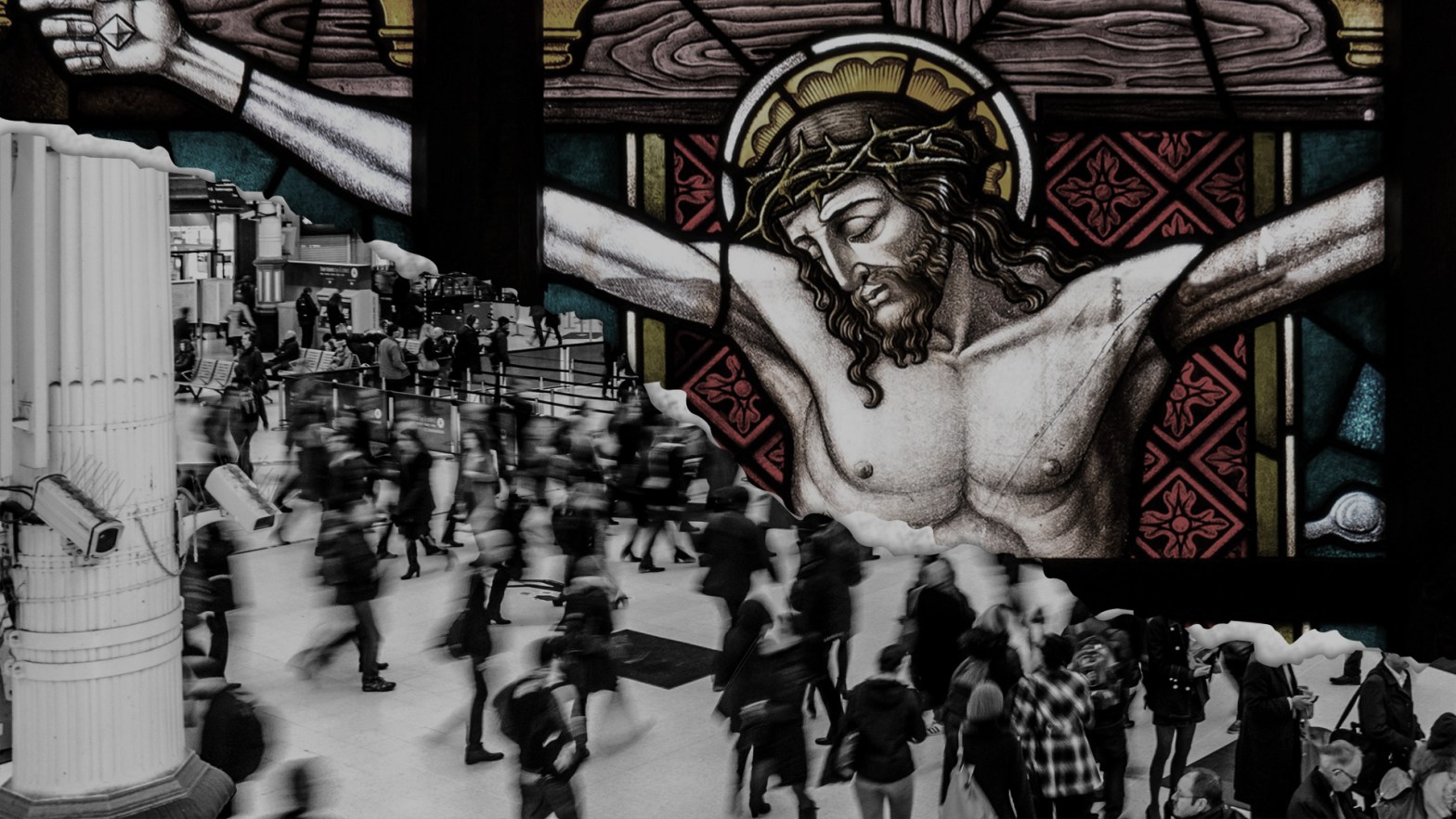
Something that sets Christianity apart, especially in the historical context where it emerged, is its insistence that our relationship with God is not just acted out by religious ritual, but that it’s actually acted out by how we live in relation to the people around us. The inadequacy of ritual sacrifice as a proof for our love of God was made apparent in the Old Testament, as well as the new.
Isaiah 1:11-17 (HCSB) shows us God’s heart on the matter:
“’What are all your sacrifices to Me?’
asks the Lord.
‘I have had enough of burnt offerings and rams
and the fat of well-fed cattle;
I have no desire for the blood of bulls,
lambs, or male goats.
When you come to appear before Me,
who requires this from you—
this trampling of My courts?
Stop bringing useless offerings.
Your incense is detestable to Me.
New Moons and Sabbaths,
and the calling of solemn assemblies—
I cannot stand iniquity with a festival.
I hate your New Moons and prescribed festivals.
They have become a burden to Me;
I am tired of putting up with them.
When you lift up your hands in prayer,
I will refuse to look at you;
even if you offer countless prayers,
I will not listen.
Your hands are covered with blood.
‘Wash yourselves. Cleanse yourselves.
Remove your evil deeds from My sight.
Stop doing evil.
Learn to do what is good.
Seek justice.
Correct the oppressor.
Defend the rights of the fatherless.
Plead the widow’s cause.'”
What’s interesting is that God has apparently grown tired of the religious rites that He actually prescribed. The Sabbath, for instance, is part of the 10 Commandments, the Mosaic Law that God gave on Mount Sinai. Why would He grow tired of something He actually put in place?
In Matthew 22: 37-40, Jesus tells us that the greatest commandment is to love God with all that we are – our heart, and soul, and that the second is like it: love our neighbors as ourselves. He says that all the law and the teaching of the prophets stand on these two things.
So, why would God grow tired of the rituals that He actually put in place? Maybe it’s because the rituals became devoid of their meaning. They grew to become neither an act of love for God nor an act of love for neighbor. They became religious necessity, self-righteous affirmation, a sort of magic to try to manipulate God, even a means by which the religious elite could dominate those they were supposed to be caring for.
God’s response is to tell His people that all the religious actions, the prayers, the sacrifices, they’re all garbage if we’re ignoring justice and oppression, if we’re ignoring the widow and the orphan. God is not just looking for empty ritual “worship.” If it is worship to love our neighbor, then it is blasphemy to say we love God and to ignore the needs of our neighbor. 1 John 4:20 (HCSB) says, “If anyone says, ‘I love God,’ yet hates his brother, he is a liar. For the person who does not love his brother he has seen cannot love the God he has not seen.'”
God actually is interested in religious actions or “rituals,” even in modernity. He is interested in church attendance, He is interested in prayer, He is interested in worship. But He is not interested in those things if they are separated from caring for people. Jesus didn’t say, “Love God with your heart and soul, and love your neighbor if you have time.” The two go together. Love God and love your neighbor. And if you aren’t loving your neighbor, are you really loving God?
It’s a tough question. But it’s one we have to ask as Christians. “How am I loving the people around me?” A mentor once challenged me with the question, “If you received everything you ever prayed for, how many people besides you would be impacted?” That’s a great question to ask yourself!
How can you build relationships with people? Whose needs can you meet? It could be as simple as getting a group of people together for games on a weekly basis, or maybe to read through a good book together. It could be joining a small group at church, or maybe even leading one. It could be volunteering at church or at a local shelter or food bank or some other organization. Loving and serving people can take all kinds of different forms, but regardless of what it looks like, it’s an essential part of Christianity. The goal isn’t just checking the box that says, “I interacted with people,” but it’s intentionally building relationships with people, loving them the way God loves them, and pulling them into the kind of Heaven-on-Earth God really wants them to experience — a world where they are cared for, where they are heard instead of just talked at, where they genuinely know that they are loved by their friends and by their God.
Our interaction with the people around us, with the world around us, is not separate from our faith. It is an indicator of our faith. If all that we take part in only promotes ourselves, we don’t worship God, we worship ourselves. I don’t say this as some paragon of faith, as the epitome of loving one’s neighbor. I say this because it’s a challenge I’m confronting in my own life, and one I think every Christian should confront. And I hope that as I intentionally move toward living a life defined by loving the people around me, I can bring some others along with me.
 The Endeavor